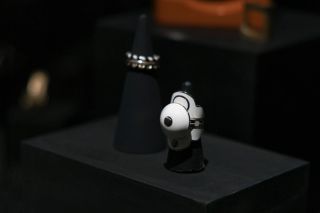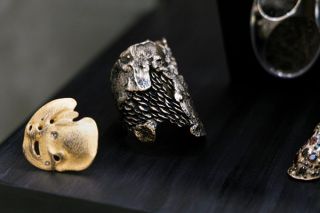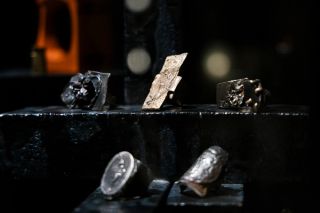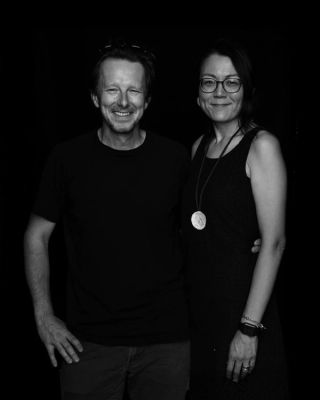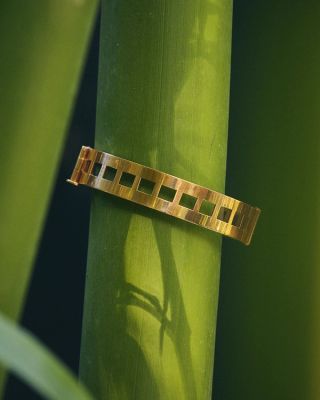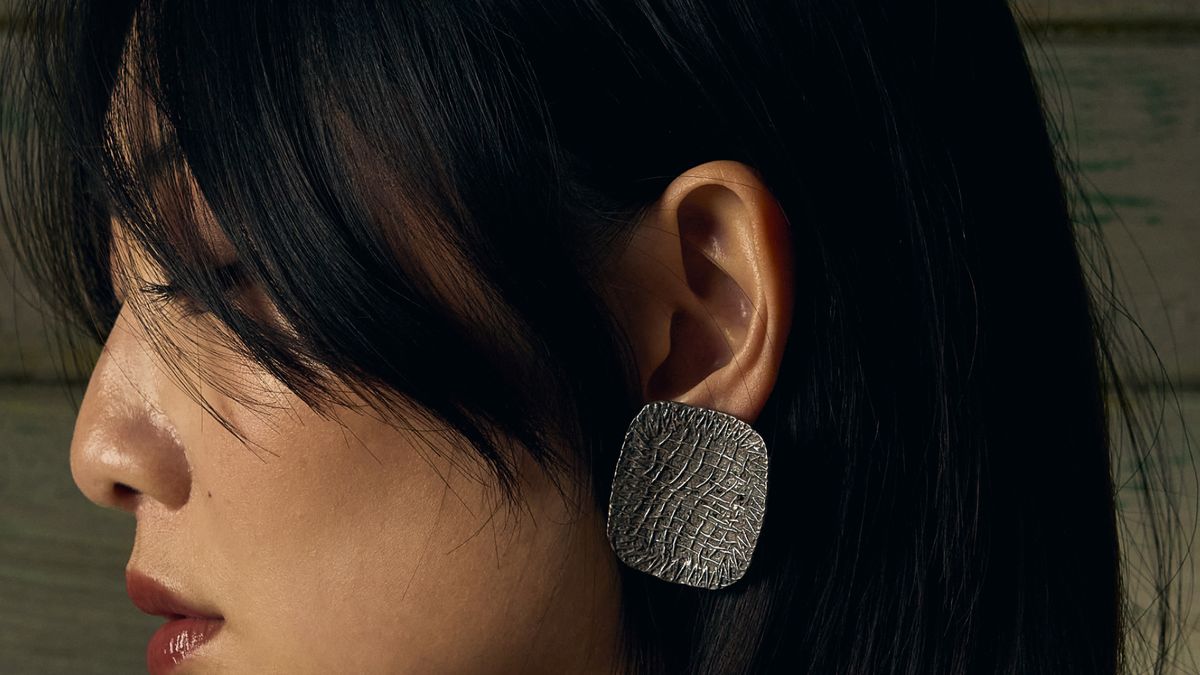
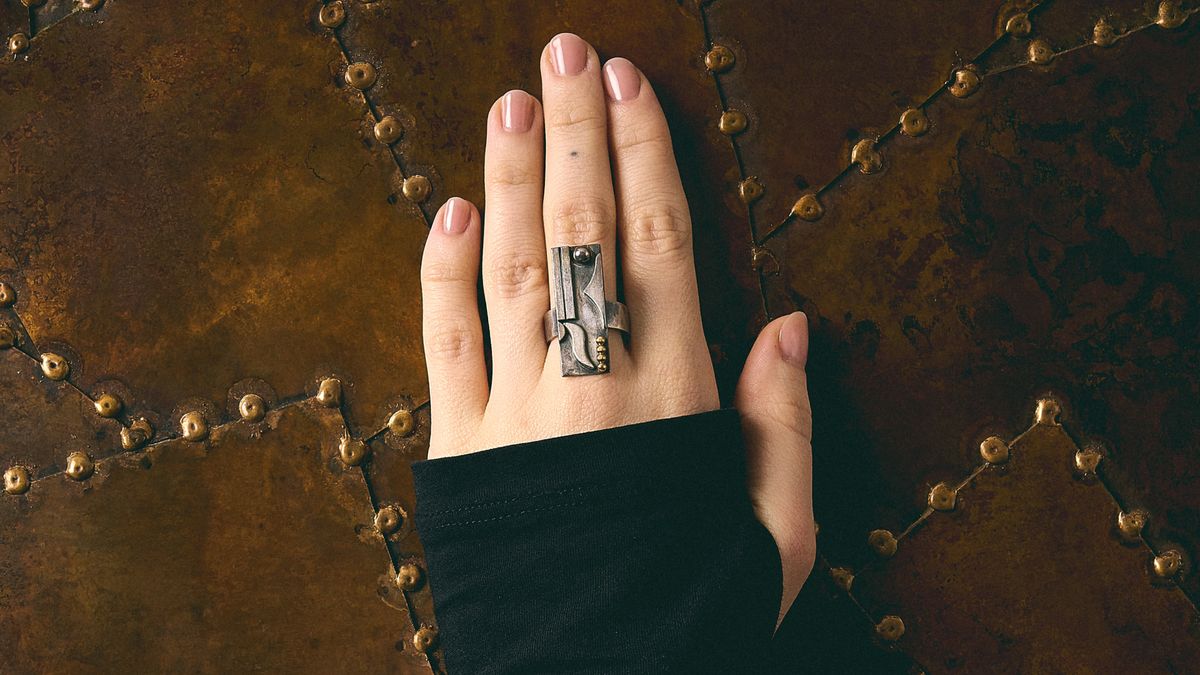
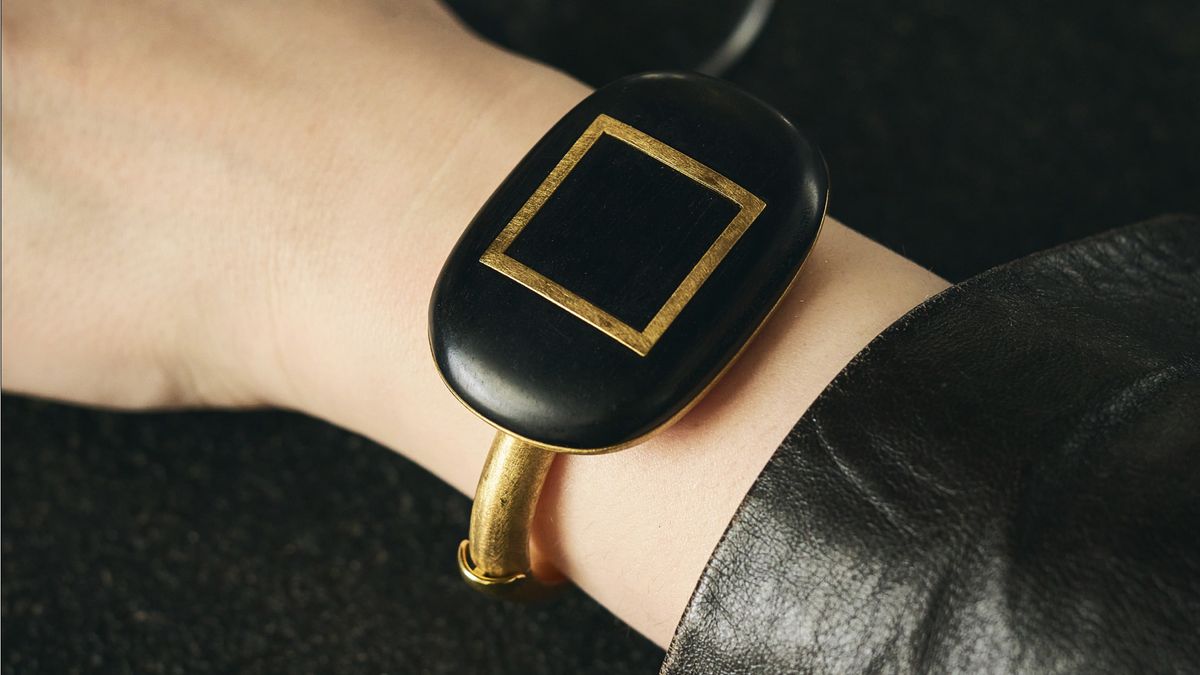
The jewellery works on view articulate a refined, experimental language, shaped by the distinct philosophies of their makers. The Tiss-Tiss Earrings Square Black by Aki+Arnaud Cooren reflect the artist duo’s commitment to clarity, balance, and essential form. Drawing on principles of Japanese minimalism and French modernist design, their work seeks to distil objects to their purest expression, where proportion, lightness, and precision become central. The Tiss-Tiss series evokes methods of weaving, translating textile sensibilities into metal with a quiet rigour that emphasises both fragility and strength. In dialogue with this refined restraint, the Ring Rectangulaire by Jean Després embodies a radically different, yet equally influential, modernist vision. Rooted in the industrial aesthetic of early 20th-century France, Després drew inspiration from machinery, architecture, and the burgeoning machine age, creating jewellery that rejects ornament in favour of bold geometry and material honesty. His work remains emblematic of an era in which jewellery became a site for avant-garde experimentation and architectural thinking.
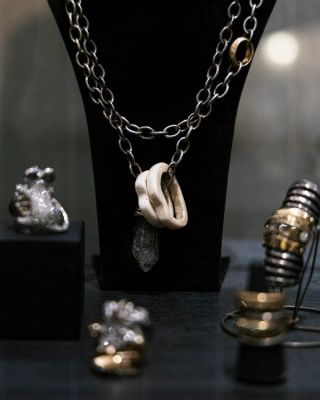
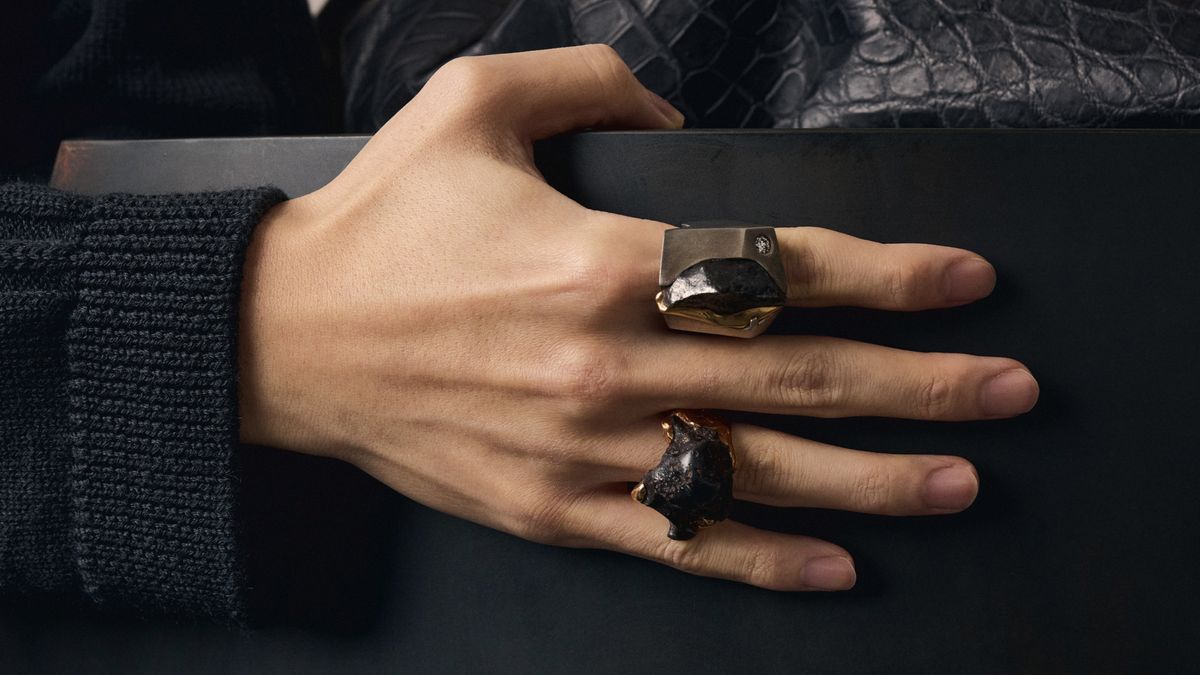
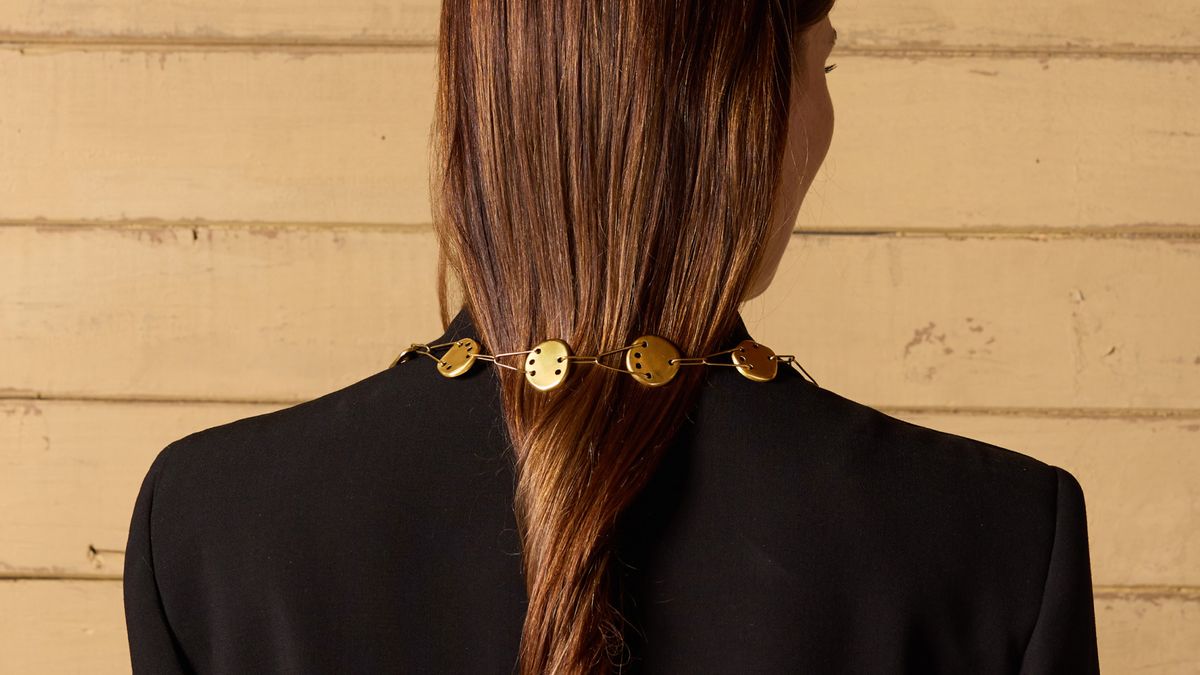
The Phobos Ring by Paris Kain and Caroline Van Hoek’s Mategoh Necklace introduce more expressive and conceptually driven approaches to adornment. Paris Kain’s practice is deeply informed by themes of transformation, mythology, and the cosmos, with the Phobos Ring evoking the enigmatic surface of its namesake celestial body. The piece captures a tension between rawness and refinement, suggesting both erosion and creation, as if shaped by forces beyond the human hand. In contrast, Caroline Van Hoek’s work is rooted in a profound engagement with traditional craftsmanship, particularly her fascination with glass and its alchemical properties. The Mategoh Necklace reflects her interest in material narratives and the passage of time, combining meticulous technique with an organic, almost geological sensibility. Together, these works highlight the diversity of contemporary jewellery practices, where personal histories, cultural references, and material explorations converge to redefine the boundaries of adornment.
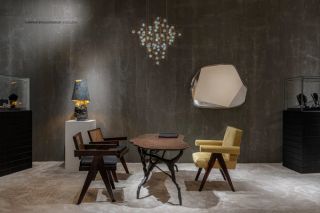
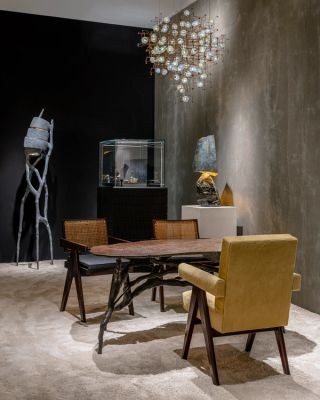
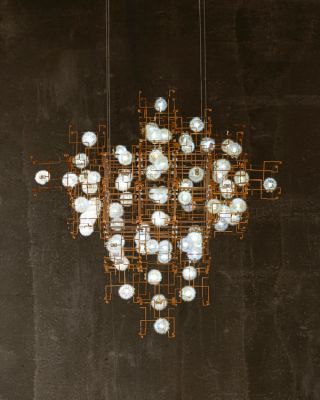
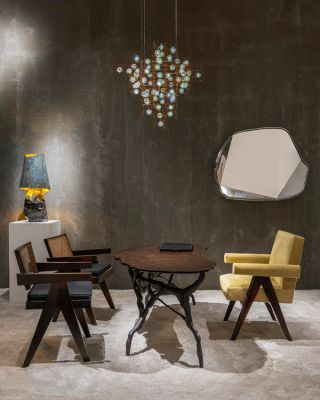
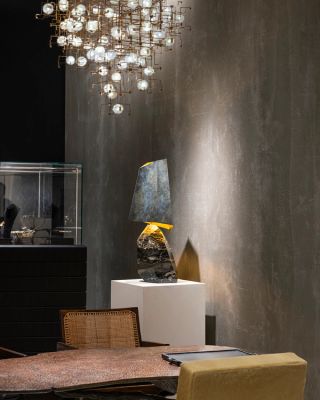
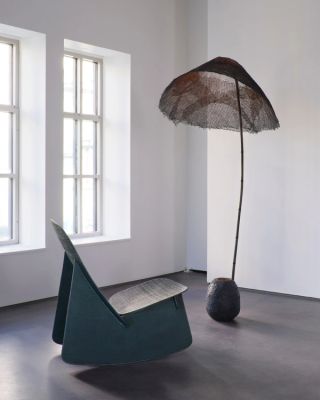
Extending this dialogue into the spatial realm, the design works anchor the presentation with a commanding physical presence. Vincenzo De Cotiis’ DC2404A Mirror operates as both reflective surface and material composition, its layered patina and fractured textures embodying a process-driven aesthetic that embraces imperfection and transformation. In parallel, DRIFT’s Fragile Future FFC 3.8 Small Diamond introduces a poetic exploration of light and ephemerality. Known for their interdisciplinary practice that merges technology with nature, DRIFT draw inspiration from the delicate structure of dandelion seeds, preserving them by hand and integrating them with LED technology. The result is a luminous composition that appears both natural and otherworldly, capturing a fleeting moment of fragility while suspending it in time. Together, these works articulate a dialogue between permanence and transience, material weight and immaterial light, reinforcing the exhibition’s broader investigation into the evolving language of collectible design.
Together, these works form a cohesive narrative that examines the intersection of art, design, and craftsmanship. Through contrasts of scale, material, and conceptual approach, the exhibition invites viewers to consider how objects—whether worn or inhabited—mediate our relationship to space, identity, and time. Carpenters Workshop Jewellery’s presentation at PAD Paris ultimately proposes a vision of design as a living practice: one that is at once deeply rooted in tradition and continually evolving through experimentation and artistic collaboration.