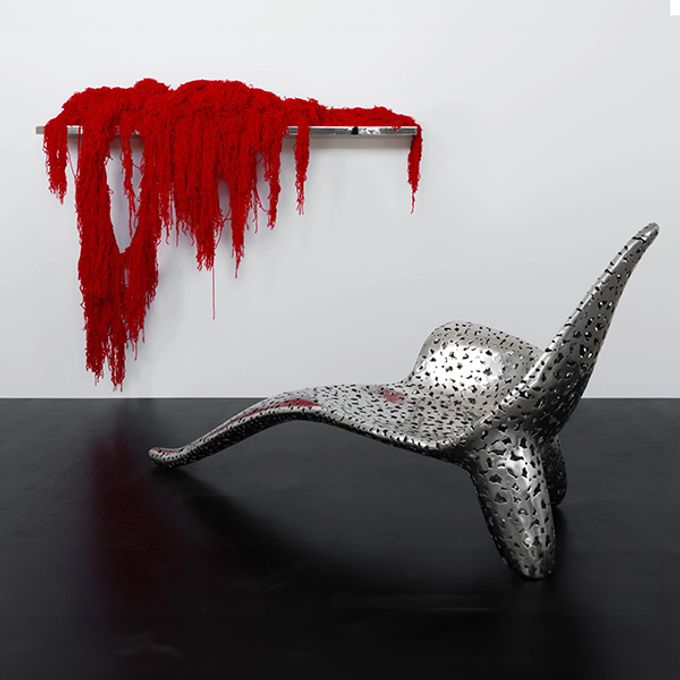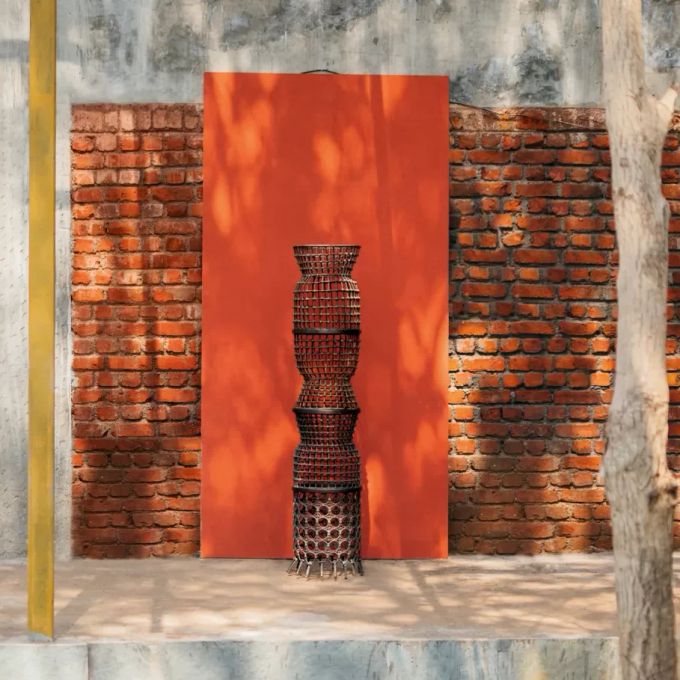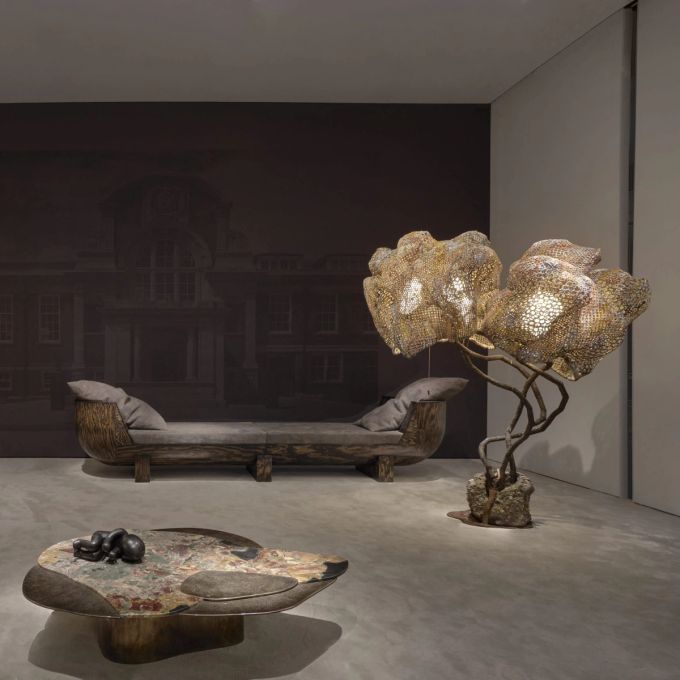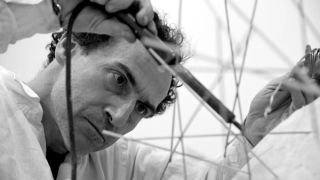
After graduating at the Rotterdam Art Academy, Van Lieshout quickly rose to fame with projects that travelled between the worlds of minimalist design and non-functional art, with sculptures, installations, buildings and furniture that explore both utopias and dystopias, fantasy and function, fertility and destruction. Van Lieshout founded his eponymous studio in 1995, working solely under its moniker ever since as a methodology toward undermining the myth of the artistic genius.
Atelier Van Lieshout is known for dissecting systems, be it in society as a whole or within the human body. The recurring themes, motives and obsessions of the studio’s work include power, autarky, life, sex and death. Van Lieshout famously declared a free state named AVL-Ville in 2001, a self-sufficient commune in Rotterdam’s harbour with minimum rules, maximum liberties and the highest degree of autonomy. The sculpture Domestikator, which caused controversy in 2015, is typical of Van Lieshout’s signature style of political and material provocation – a bold statement on the abusive practices of agriculture, factory farming and genetic manipulation.
Van Lieshout’s works have been exhibited in institutions including Ludwig Forum für Internationale Kunst, Museum Folkwang, Sprengel Museum and MoMA PS1, as well as in the major international art biennales of Gwangju, Venice, Yokohama, Christchurch, Shanghai and São Paulo. Work by the artist is represented in numerous collections, such as The Museum of Modern Art, Stedelijk Museum, Fonds national d'art contemporain, Museum Boijmans Van Beuningen and Prada Foundation.
Atelier Van Lieshout has been awarded numerous prizes and awards, including the Prix de Rome in 1995, the Wilhelmina-ring in 2000, the Stankowski Award in 2002 and the Kurt Schwitters Award in 2004. The book Bad Ideas for Good Living (2025, Maas Lawrence) is a conceptual journey through Van Lieshout’s radical thought experiments, structured like a house in which readers can wander from one room to another.