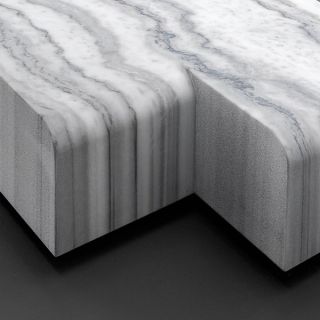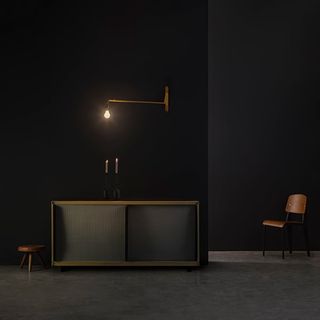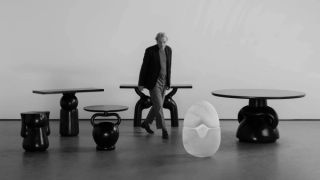
Schmitt’s sculptural forms, from the graceful arch of a marble cabinet to the enduring silhouette of a Jarre table, echo the Romanesque churches of his Poitou childhood. These influences shaped his pursuit of timeless, monumental design.
Beginning as a self-taught artist, Schmitt welded his first pieces alone in what he describes as his “urban, barbarian and rock’n’roll period,” marked by the rhythmic beating of his sledgehammer. This hands-on approach remains central to his practice.
Schmitt strips away ornament in favour of balance – or the compelling appearance of imbalance. His tables and consoles feature folded bronze paired with contrasting materials that play against metal’s inherent rigidity. Yet he cannot resist the occasional curve, continuously developing his own vocabulary of forms.
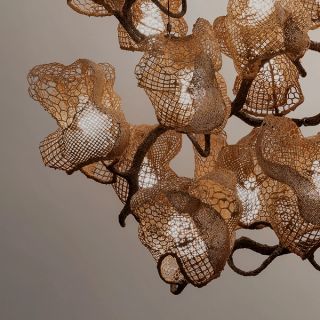
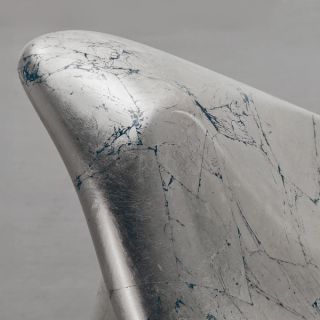
The forest surrounding his Fontainebleau workshop inspires his organic pieces, evident in his series of bronze tree stumps and rocks that symbolize nature’s essence. Throughout his work runs a constant interplay of light and shadow, density and space, past and future.
As Cocteau observed, “all which is fashionable goes out of fashion.” While it may be presumptuous to claim anything is truly timeless, Schmitt’s objects aspire to this distinction through their near-indestructible quality – relics of a civilization yet to be invented.