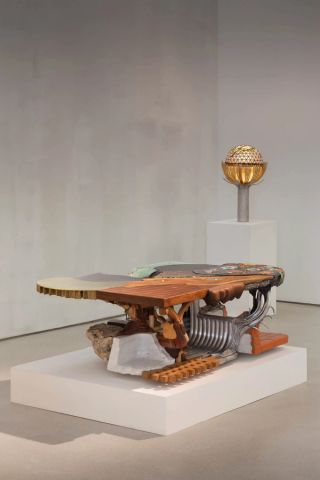
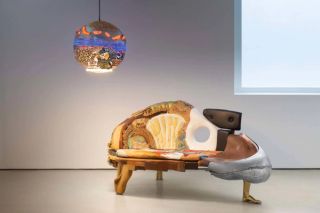
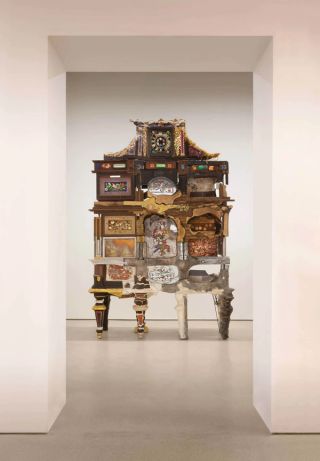
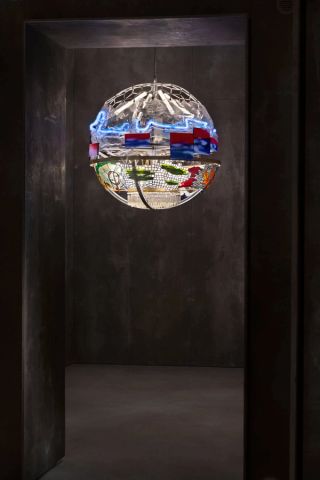
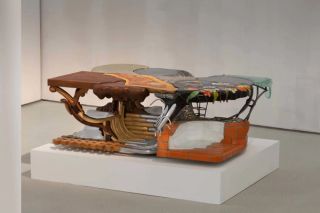
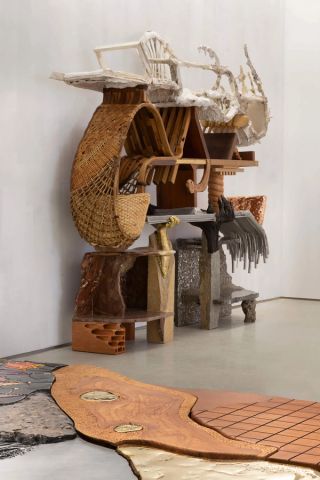
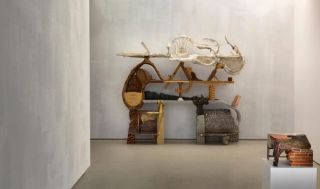
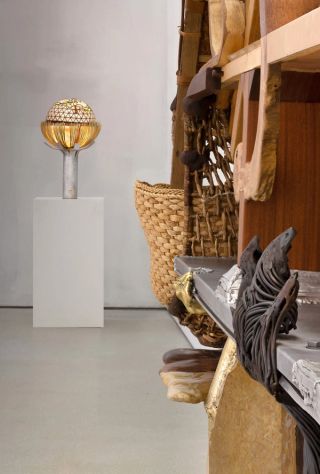
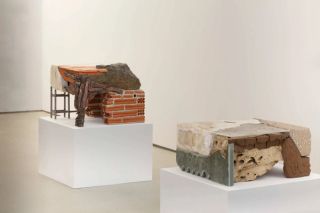
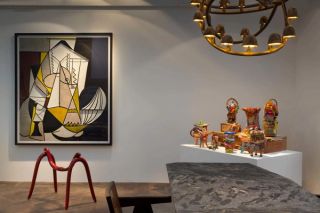
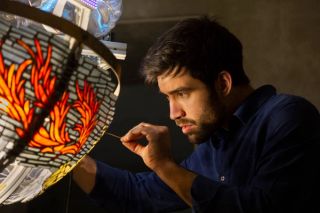
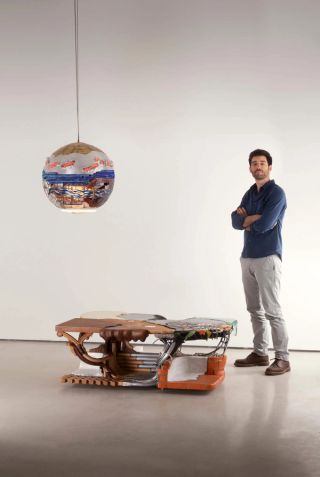
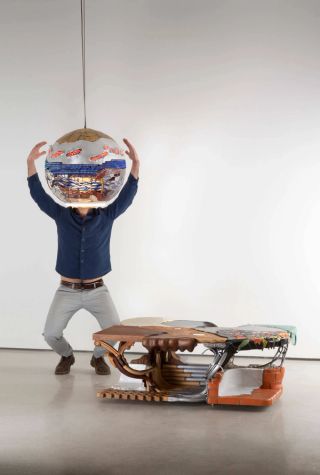
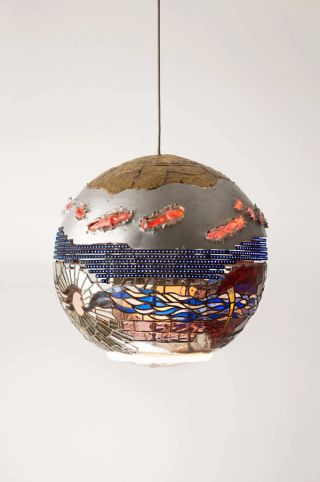
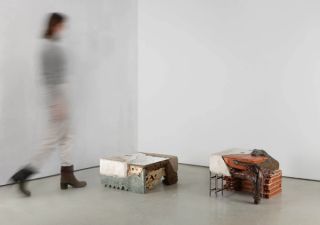
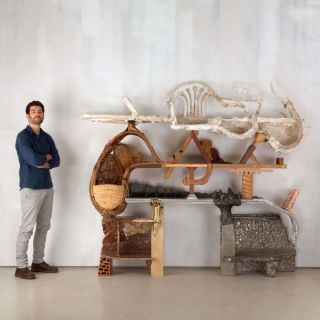
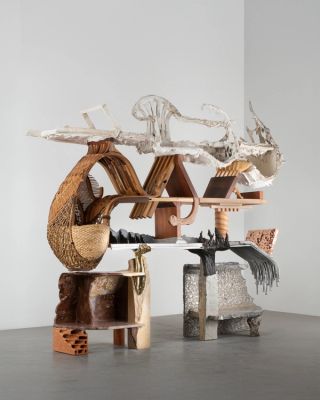
At first, the assembly of the pieces appears to have been chaotically mismatched, but under closer inspection, the elements are intelligently assembled horizontally and vertically in order of their materiality. With a non-hierarchical approach, Kostas juxtaposes concrete, stone and ceramics with wood and plastics. Kostas gathers unwanted objects from across Athens, which often hold both national and personal identities varying from broken marble objects, stone taken from the artist’s aunt, broken window glass, tiles, bamboo baskets, rattan and wooden furniture, plastic garden chairs, car parts and hard plastic objects. To complete his works, Kostas creates new elements from raw materials, for example, the artist integrates a bronze cast of his hand found in the «It’s not enough» bookshelf, and assembles a floral mosaic for Faux Baroque which references a floral design found on the Badminton cabinet. The nature in which Kostas collects, creates new elements and assembles them makes each piece completely unique, and can often take months to complete.
The notions present in many Baroque artworks have also proved to be a key source of inspiration to Kostas, who draws attention to the fluidity and movement of the materials while composing his works by highlighting two opposing forces, with upward movement representing immortality and downward representing a gradual decline into disorder. This is present in the centre piece of the collection, Elemental Cabinet, inspired by the 18th century Badminton Cabinet which set the record for being the most expensive piece of furniture sold for $36 million. For this monumental piece, which was also central to his graduation project, Kostas used mineral based materials like marble, ceramics and plaster at the cabinet’s base, before transitioning vertically to metals, and then to wood and plastic, with the clock being reconstructed with textiles and electronics.
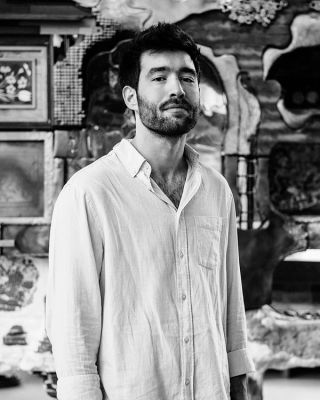
Kostas worked in fellow Carpenters Workshop Gallery artist Nacho Carbonell’s studio for eight years and has participated in several group exhibitions including “Metamorphosis: Art in Europe now” at Fondation Cartier in Paris in 2019.
View the tour