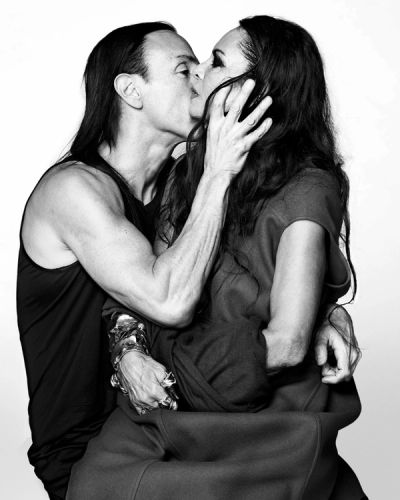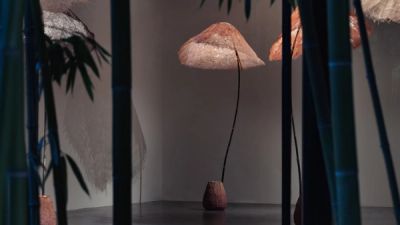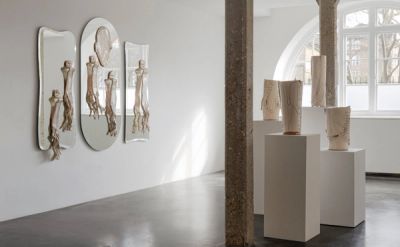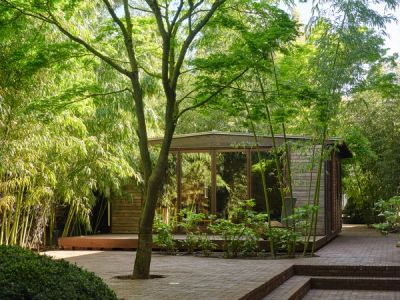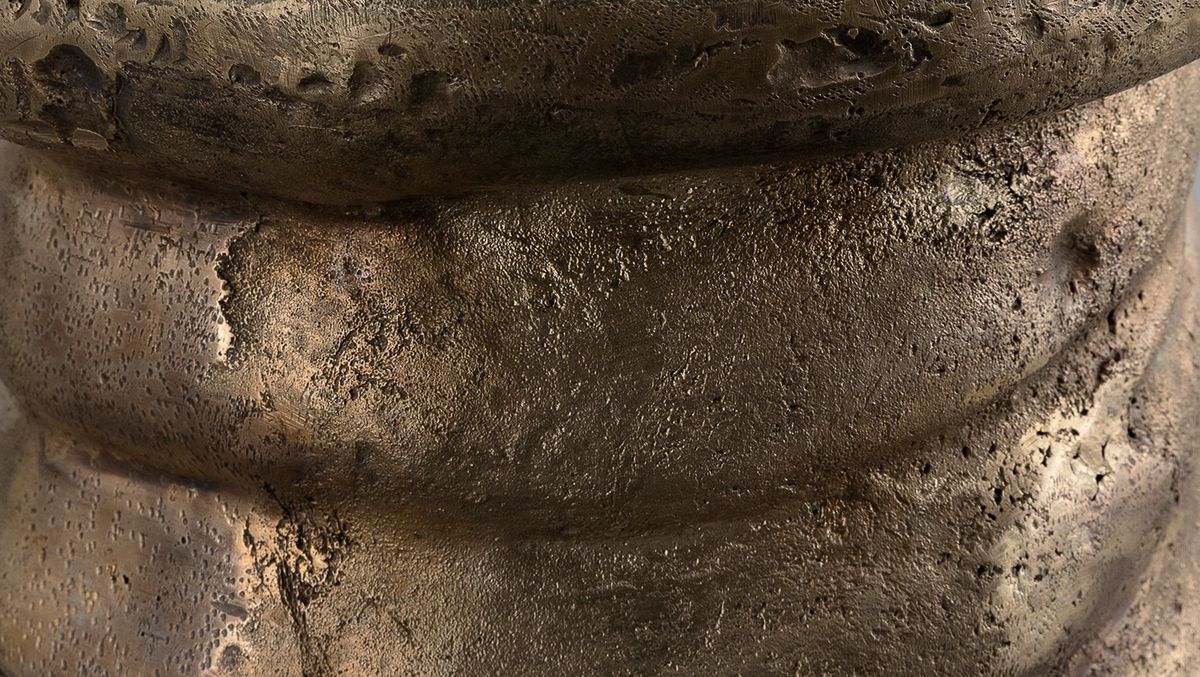
For Lamy and Owens, rust becomes a metaphor for creative resistance — a material language that rejects the corrosion of time. What appears decayed is, in truth, resilient; what seems eroded reveals unexpected strength. In this alchemy of oxidation, rust is not the mark of decline but a proof of life — evolving, alive, and enduring.
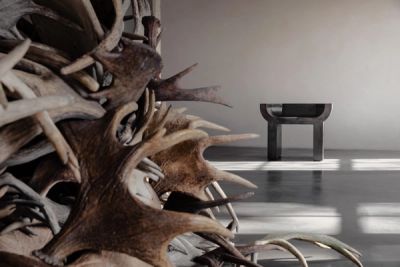
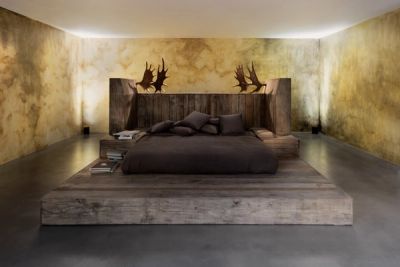
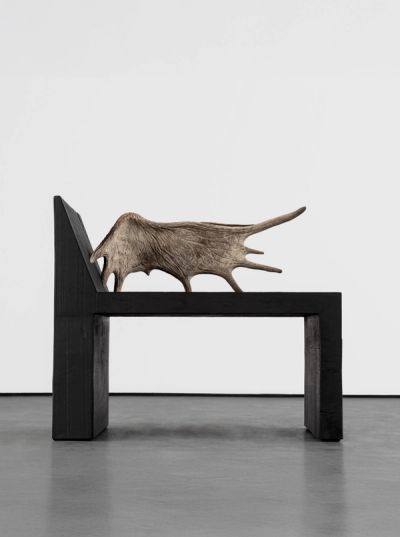
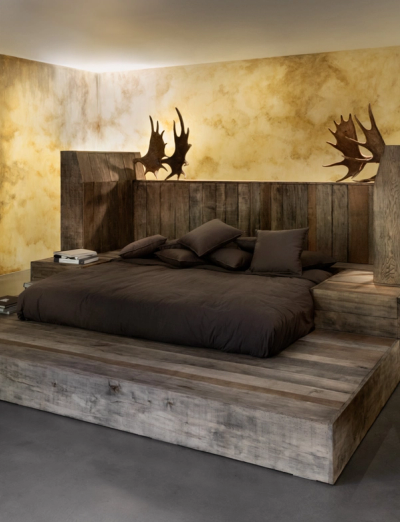
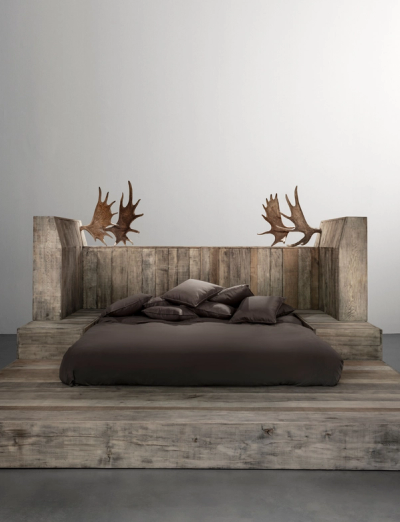
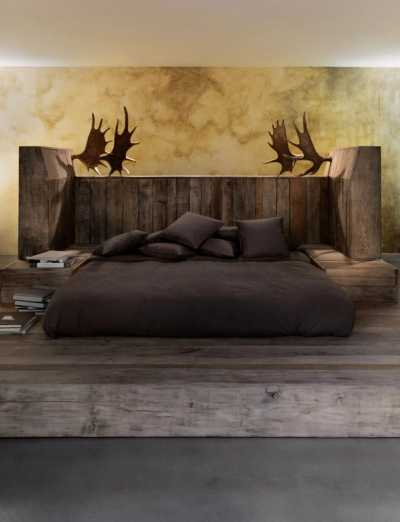
The works in Rust Never Sleeps advance Owens’ exploration of primal materiality and architectural form. Among the highlights, the Antler Bed (2025) — shown publicly for the first time — embodies a cycle of renewal. Crafted from recycled elm wood, its organic surface carries the vitality of the material itself: living, flawed, and raw. The piece continues Owens’ legacy from the Pompidou series (2019), building a nest from what has come before.
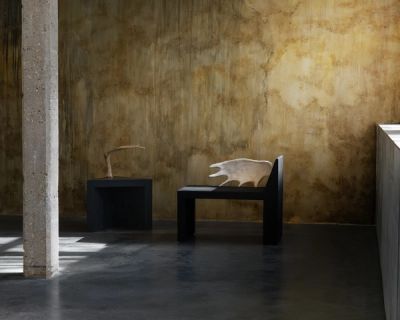
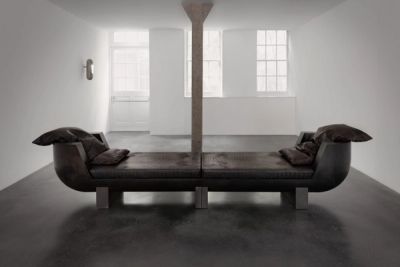
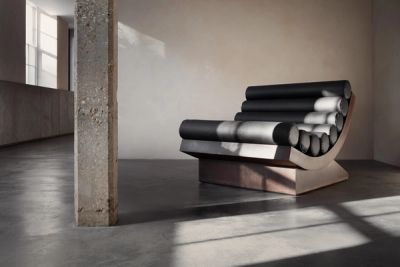
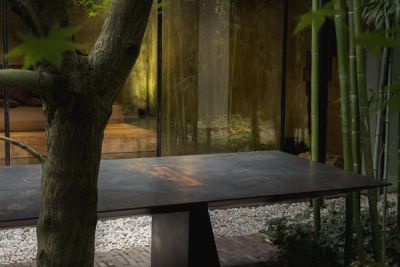
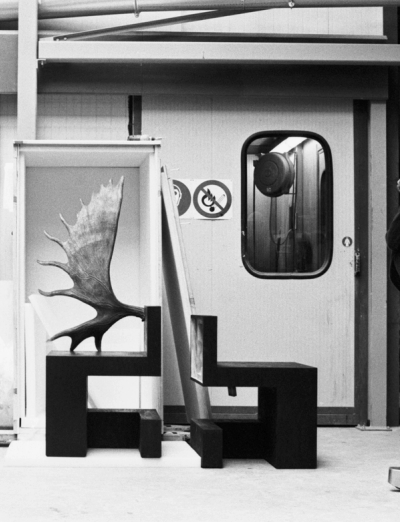
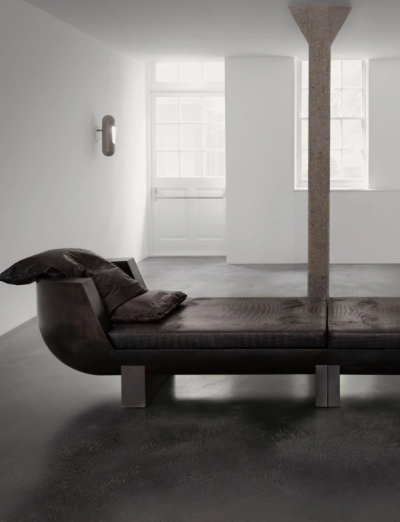
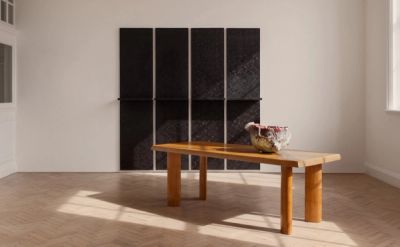
The dialogue between permanence and impermanence deepens in Double Bubble (2025), where rusted steel and graphite crocodile leather engage in a tactile conversation between the elemental and the animal. Similarly, the monumental K Plug Table (2022) revisits a form first prototyped by Lamy from Owens’ sketches — a continuous study in balance and bronze. Finally, Pedalò Rust (2025), with its distinctive steel patina and camel leather cushions, captures the exhibition’s pulse: each rust pattern a record of time’s passage, every surface a map of transformation.
In Rust Never Sleeps, decay is reimagined as persistence. The creeping corrosion of time becomes an act of defiance — an artist’s refusal to fade. Through these works, Owens and Lamy reveal that in rust there is not ruin, but renewal: strength forged through oxidation.