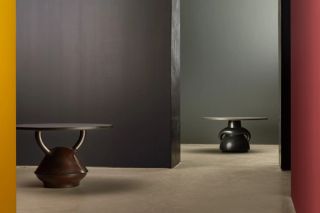
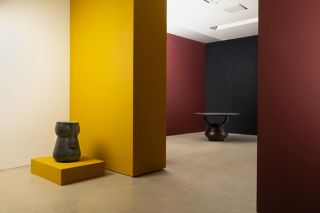
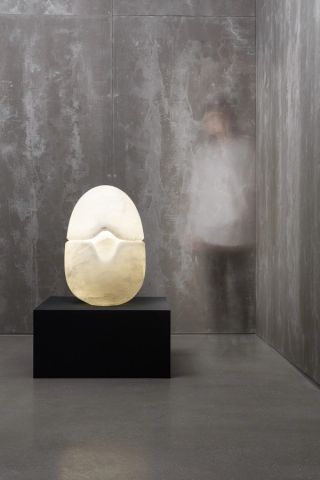
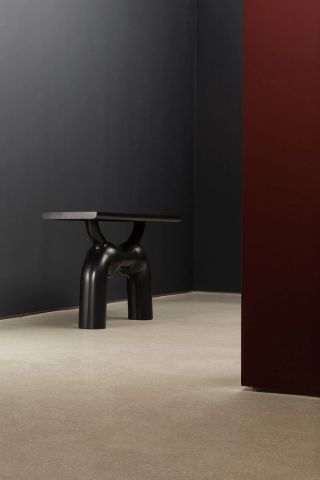
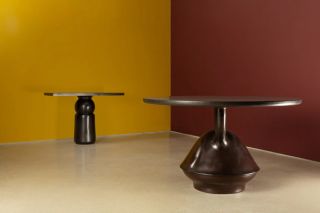
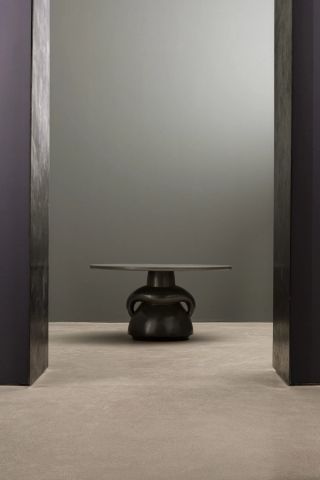
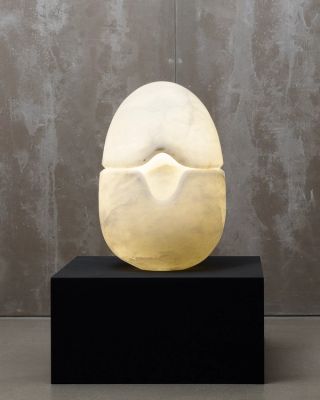
Schmitt draws influence from a cultural melting pot of overlapping biblical, classical and mythological traditions, pitting preconceptions of antiquity against each other. Qualities that at first seem rudimentary are repositioned as refined; Lost symbols appear suddenly familiar. The artist intentionally disorientates the viewer, creating objects that defy easy categorisation of how or when they were made.
A search for simplicity motivates Schmitt. Despite the technological capabilities at his disposal, he is drawn to the formal purity of prehistoric artworks, objects shaped with basic tools. Avoiding contamination with art historical concepts or precedents, Schmitt removes complexity from his work. The artist describes his artworks as silent, which denotes their calming presence and understated serenity, but also gives a sense of each artwork existing beyond language.
Lava, alabaster, bronze; the materials Schmitt uses in Mytho inherently allude to a timeline of material development throughout history. Boldly coloured patinas give the bronze an aesthetic of impossibly well preserved ceramics, as Schmitt superimposes the modern over the ancient. Carved and coloured lava table tops is a technically difficult achievement, yet the result appears natural. This is the balance that Schmitt strikes in all his work, enabling an artistic practice that draws from the past while pushing forward at the cutting edge of design.