19 June 2026
Living Forms: When Jewellery Begins to Breathe
What happens when metal begins to behave like life? Jewellery has long been understood as an object of permanence: precious materials shaped into forms meant to endure. Yet in the hands of many contemporary artists, metal resists this stillness. It folds, grows, trembles, gathers memory, or assumes the quiet presence of living companions. These works do not remain inert ornaments resting upon the body. They move with it, respond to it, and at times seem almost to breathe beside it.
Share
Across the practices of Alina Alamorean, Sylvie Auvray, Kayo Saito, Ute Decker, and the collaborative works of Michèle Lamy and Loree Rodkin, jewellery emerges as something far more vital than ornament. Their objects evoke growth, movement, creaturely presence and emotional transformation. Rather than imposing meaning upon the wearer, these works accompany the body in subtle ways, responding to gesture, light and time. Metal becomes sensitive matter. In their hands, jewellery no longer merely represents life; it begins to inhabit it.
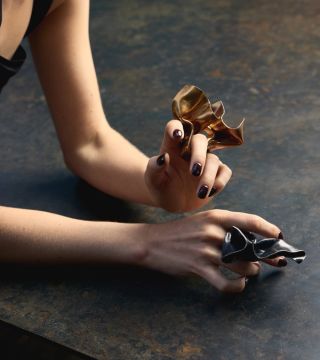
In Alina Alamorean’s work, jewellery becomes a vessel for human experience, an intimate form where memory, emotion and physical presence converge. All her rings rise in soft, flowing volumes, their surfaces bending and folding like living tissue shaped by invisible pressure. The metal appears almost vulnerable, as though the forces that formed it were not merely physical but emotional. Beauty here does not arise from perfection but from tension, from the quiet dialogue between strength and fragility, between control and surrender. Each curve feels inevitable yet unsettled, as if the form were still adjusting itself to the rhythm of the body.
For Alamorean, jewellery carries the weight of her personal history, and memories. Many of her ideas begin with inherited objects, pieces of family jewellery that travelled through generations carrying the silent traces of lives lived before her. These fragments of the past are not simply materials to be reused, they are emotional archives. By transforming them into new works she creates a bridge between memory and the present moment, allowing stories to continue through the body of the wearer. The act of making became for the artist an act of liberation. After years of inhabiting expectations that were not her own, jewellery offered her a language through which identity could be reclaimed. Each piece therefore holds condensed emotion: tenderness, anger, resilience and love. To wear one of her works is to carry a quiet intensity. The metal does not impose meaning, it invites reflection. Through curves, voids and continuous movement jewellery becomes a space where inner life finds physical form.
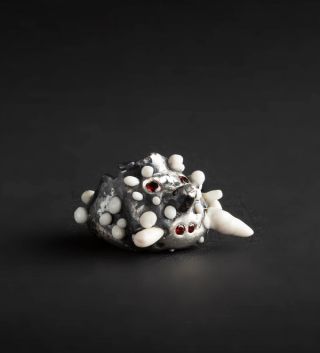
A different register of intimacy appears in the work of Sylvie Auvray, where jewellery introduces something playful and uncanny: the possibility that objects themselves might possess personality. Her Ring 23 (2021), composed of silver, porcelain and garnet, rests on the hand like a small creature that has chosen the wearer as its temporary habitat. Clusters of pale protrusions rise across the surface, punctuated by the deep red glimmer of garnet stones that resemble watchful eyes. The object seems alert, almost aware.
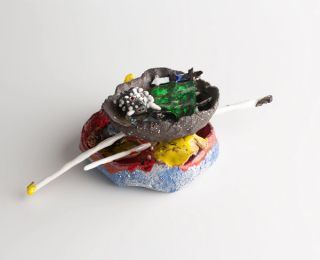
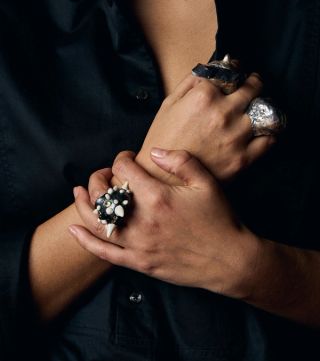
Auvray often describes her pieces as companions rather than possessions. In conversation she recounts rediscovering rings she once made tucked into pockets years later, encountering them again with the same familiarity one might feel when meeting an old friend. Time does not diminish these objects, it deepens their presence. In her practice, jewellery behaves like an ingredient within a larger composition of life. Its meaning shifts according to who wears it, how it is carried and the moments through which it passes. Objects do not dictate identity, they participate in it. There is also unmistakable humour within Auvray’s work. She once suggested that if her pieces could speak, they might recount amusing stories about her life, describing themselves as “little animals.” Ring 23 captures this sentiment perfectly. Slightly mischievous and quietly alive, it reminds us that the most powerful objects are often those that accompany us patiently, gathering the traces of everyday existence.
Nature appears more directly in the work of Kayo Saito, where jewellery echoes the quiet intelligence of botanical growth. Her Seedpod Earrings and Seedpod Bracelet (2020) capture the suspended moment before a plant opens. Darkened silver forms layered with black rhodium curve outward like slender pods poised on the verge of release, interrupted by luminous elements of gold that catch the light as the wearer moves. The structure is delicate yet rhythmic, each segment repeating with subtle variation.
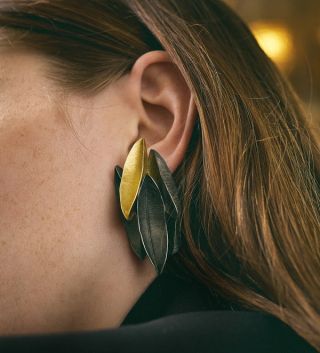
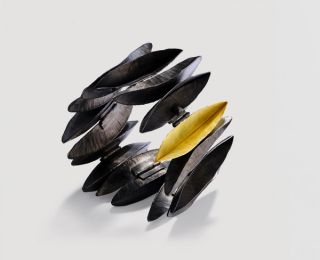
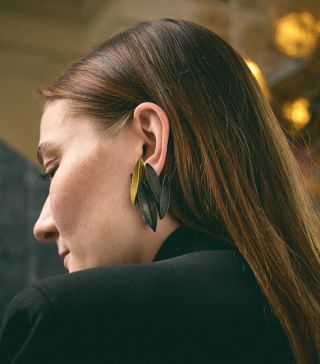
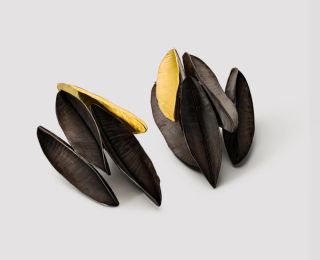
For Saito, nature is not merely a source of imagery but a philosophy of observation. She is drawn to fleeting transformations that often escape notice: the opening of a bud, the curling of a drying leaf, the quiet architecture of a lotus flower drifting on water. These small events contain an elegance that cannot be forced; they unfold gradually. Her jewellery reflects this attentiveness. The repetition of slender forms creates a rhythm reminiscent of plants swaying in air or water, giving the objects a quiet sense of breath. Movement is never dramatic but almost meditative. Equally important is Saito’s relationship with material. Recycled fragments of silver and gold are melted, stretched and reformed, allowing earlier works to re-emerge within new structures. Each piece therefore carries a layered material history where traces of the past persist beneath the surface. Once worn, these forms begin another cycle, absorbing the gestures and memories of the wearer and continuing the quiet process of transformation that first began in nature.
Where Saito observes the slow intelligence of plants, Ute Decker captures movement itself. Her cuff Silk Wings (2021) appears caught mid-flight. Formed from gilded metal through the demanding technique of anti-clastic metal forming, the object curves simultaneously in opposing directions, creating a surface that twists and unfurls like fabric caught in motion.
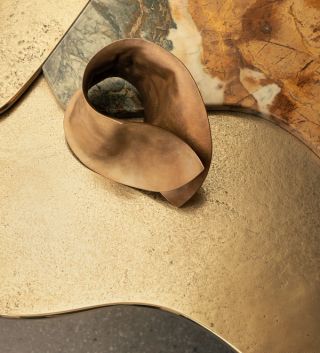
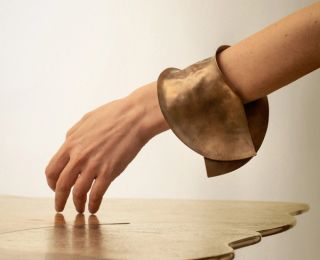
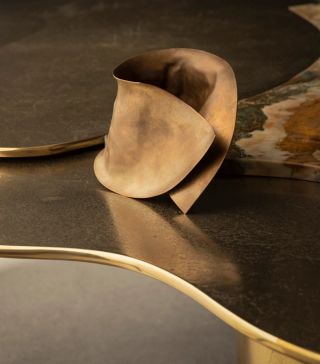
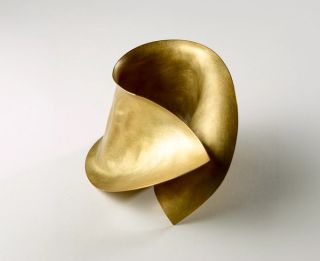
The technique requires extraordinary control. As the artist works the metal, compressing the centre while stretching the outer edges, the sheet gradually acquires a fluid tension. What begins as rigid material becomes supple and dynamic, forming a structure that feels almost weightless despite its solidity. The resulting form resembles a wing or a petal in motion. Light slides across the curved surface, revealing subtle textures left by the hammering process. Rather than concealing these traces, Decker allows them to remain visible, emphasising the labour and physicality embedded within the object. When worn on the wrist, the cuff responds gently to the movements of the arm. The metal lifts lightly from the skin, creating an interplay between body and air so that the object amplifies movement rather than simply resting upon it. Through this balance between control and freedom, Decker reveals metal as a material capable of extraordinary grace.
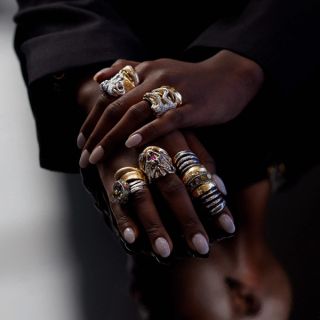
If these works suggest growth, movement and companionship, the jewellery created through the HunRod collaboration between Michèle Lamy and Loree Rodkin introduces another dimension: myth. Their Zodiac rings, formed as snakes, monkeys and ox in gold, white gold and diamond, transform jewellery into symbolic creatures. These are not naturalistic representations but powerful archetypes whose exaggerated forms recall ancient talismans once believed to carry protection or spiritual force.
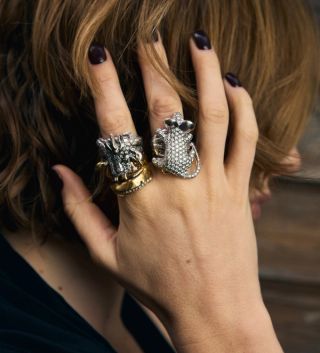
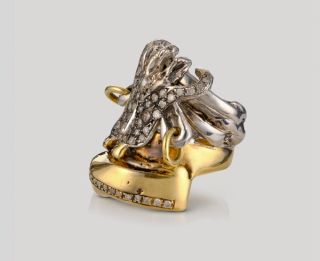
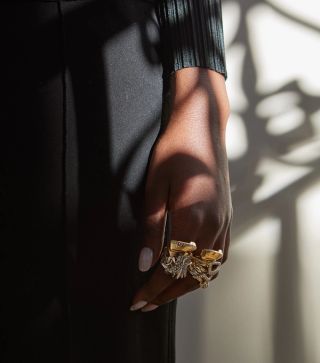
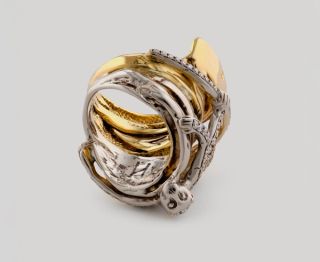
Placed upon the hand, the rings appear almost to guard the wearer. The animals crouch, alert and watchful, their diamond surfaces catching light like living eyes. They evoke the long history of jewellery as amulet, where animal forms embodied courage, fertility or protection. Through this collaboration myth enters the language of contemporary jewellery, transforming the ring into both talisman and presence.
What binds these artists is not aesthetic similarity but a shared understanding that jewellery possesses a rare capacity to behave like life. Emotion becomes form. Objects become companions. Nature becomes structure. Movement becomes surface. Myth becomes presence. Jewellery remains one of the few art forms that lives in constant proximity to the body. It absorbs warmth, gesture, scent and time. It travels through ordinary days and extraordinary moments alike, quietly gathering biography.
Over time the jewellery becomes something else entirely. It carries traces of the maker, the wearer and the lives that unfold around it. If these jewels could speak they would not speak of luxury or spectacle. They would speak of movement and patience, of petals and wings, of small creatures watching the world from the hand. They would speak of the strange alchemy through which metal begins to resemble life. In that moment something shifts. The jewel is no longer inert. It listens, it witnesses and it accompanies. Slowly, almost imperceptibly, it begins to breathe.
Share
Exhibitions
PAD Saint-Tropez 2026 Ingrid Donat | Aki+Arnaud Cooren | Roger Herman
Saint-Tropez
|2 Jul – 5 Jul 2026
More to explore
April 2026
Forms That Remember: Jewellery as Structure, Memory and Transformation
What if jewellery is not something we wear, but something that remembers for us? In this essay, Bianca Blanari explores how it becomes an intimate archive, carrying personal and cultural histories over time.