20 August 2026
Alice Cicolini: Culture, History and Spirituality
The British jewellery designer has always retained her fascination for how ideas and motifs change and adapt across time and place. Here, she tells Carpenters Workshop Gallery’s Head of Jewellery Tamara Platisa more about the cultural, historic and spiritual dimensions of jewellery.
Share
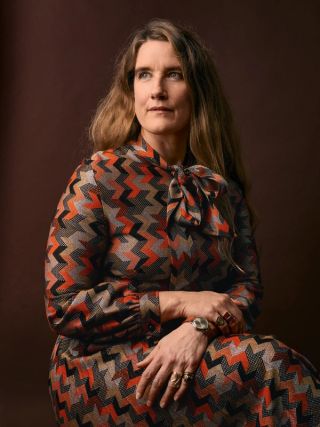
Alice Cicolini’s jewellery celebrates collaboration, craftsmanship, heritage, colour and pattern. Her inspiration flows from diverse sources, including the diamond workshops of Hatton Garden and the sacred architecture and patterns of the Silk Route. Her early work uses the traditional craft method of meenakari – a Persian enamel tradition dating back 5,000 years and practiced in countries like India, Pakistan, Afghanistan and Iran.
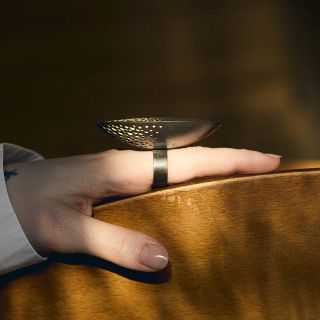
The designer is celebrated for her Memphis collection, for which she worked with award-winning goldsmith Theo Iannou and lacquer enamel craftsman Stanislav Reymer. Cicolini also collaborated with Iannou and Reymer to create Totem for Carpenters Workshop Gallery. This collection of handcrafted totemic rings was inspired by Ettore Sottsass’s ceramics and Eileen Gray’s lacquer screens.
Formerly director of arts and culture for the British Council in India, Cicolini remains closely involved with Indian craft and design. Her handmade vitreous enamel pieces are crafted in the studio of Kamal Assat Meenakar – one of Jaipur’s last remaining meenakari masters, whose family’s work is owned by the Maharajas of Patiala and Jaipur and exhibited across the world.
Tamara Platisa, Head of Jewellery at Carpenters Workshop Gallery, spoke to Cicolini to learn more about how jewellery expands past the physical dimensions of materiality and craftsmanship to encompass wider questions of history, culture and spirituality:
Tamara: What were some of the earliest pieces of jewellery that entered your life?
Alice: When I was a child, I had two different necklaces that my mother gave me – one was a necklace of shells, and the other one was a kind of branch coral with little garnets all the way through it. I also had a green enamel kookaburra because my dad was born and raised in Australia. I also had a silver bangle, which I wore so often that it’s really battered now. I still have all these things, actually – they were probably my most formative pieces of jewellery.
Tamara: What is the most unusual or surprising piece that you’re wearing today?
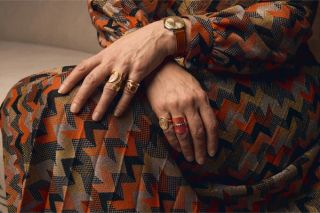
Alice: My watch, which was my dad's. He died when I was six weeks old, so my mum wore it her whole life. And after she died, when I was in my mid-30s, it sat in my safe for ages until I met my partner, the photographer Agenda Brown, who was a watch man – so I brought it out and he got it fixed for me. Of all the things I wear, it's probably the most important. It’s funny, isn’t it, for a jeweller to say that the most important thing they wear is a watch?
Tamara: Did your family always have an interest in jewellery?
Alice: My mum collected lots of jewellery. My family supported a silversmith called Peter Lowry, who was quite successful in the 1950s and 60s. I have a few pieces of his – like a bird pendant, a silver spoon, a bracelet and a lion brooch. My grandmother's engagement ring was commissioned by a jeweller from the Birmingham College of Art and Design.
So, the concept of investing in beautifully designed things by contemporary practitioners was in the family consciousness. It’s something you absorb almost without knowing. It took me a while to unpack that and fully understand how significant a part of my life jewellery was.
Tamara: You started out as a fashion curator – so, what was it about jewellery that made you change direction?
Alice: In the jewellery object, I found a concentration of all the things that I had really spent my life being inspired by – pattern, colour, craftsmanship, storytelling. They all coalesced in the world of jewellery in a different way to fashion.
Jewellery is a very unique because it makes contact with the body. So, there are certain things it needs to do. It needs to not be too heavy, to sit nicely and not catch on people's clothes – all the practical things. At the same time, there are few things that we infuse with so much power and energy.
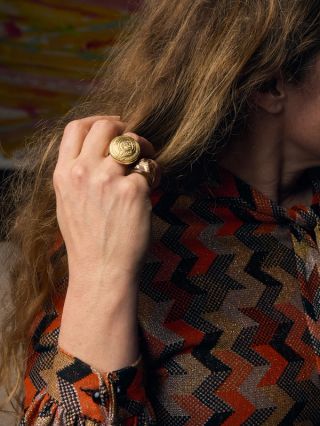
Tamara: So, beyond its physical aspects, how does jewellery carry spiritual dimensions?
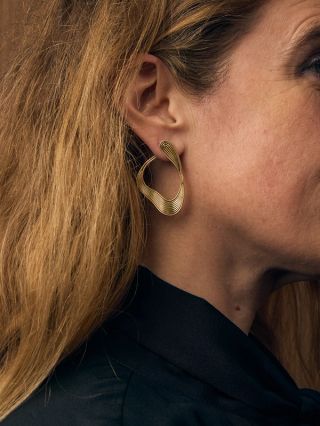
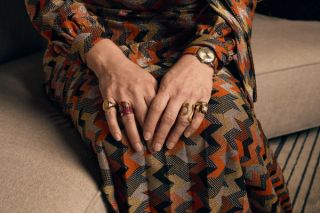
Alice: In these objects, there's my energy and the energy of my collaborators – the people who made them. And then someone buys a jewel, and they infuse it with their energy, then pass it on. That goes on and on across generations.
It’s quite extraordinary – few other objects have that quality, of something worn daily against the body that carries across decades or centuries. There's a reason why jewellery used to get buried with people. When they believed that the spirit goes into another world, jewellery was a talisman to take with them – a golden thread between one soul cycle and the next.
Tamara: When you wear jewellery, does it influence your emotions and how you physically feel in your body?
Alice: I think it does change your whole sense of yourself. I became aware of that when one of my very early clients described to me how she felt when she put on the ring that she bought from me. She said, “I have to lift myself into it, raise myself up. I have to be the version of myself that can step into the ownership of this piece of jewellery.” That’s what my original collection was all about – the ritual of getting dressed as expressing your power and your essential self.
Tamara: In what way are these small acts related to the construction of identity?
Alice: Your jewellery box is a portrait of yourself. Opening it is an act of playing with your identity. It's the same thing with fashion – putting on an identity that somebody has designed for you. But what you choose to wear, when, why – these are statements of style and taste, like a connection to your authentic self. I think jewellery functions in a similar kind of way.
Tamara: Your creative vision stretches from Venice and London to Lahore and Jaipur. You’ve also spent a lot of time working in India. How do you see jewellery’s relationship with culture and place?
Alice: I think of jewellery as a portal for cultural stories, which is a bigger conversation. It's a very powerful part of the story of a place. Would Jaipur be what it is if it didn't have jewellery? Is Benares defined by jewellery and textiles? What will Hatton Garden be like when a whole generation of goldsmiths starts to retire?
Tamara: What has this close link with culture taught you about jewellery’s role in our understanding of history?
Alice: Jewellery lasts a long time, so it’s a completely critical way of seeing what was happening thousands of years before we arrived. Many people talk about Indian jewellery as what is essentially a Mughal idea of Indian jewellery – the birds, the decoration, the delicacy, the pearls. But actually, long before the Mughal emperors, India had its own vernacular jewellery culture, which was completely aesthetically different.
These objects tell a story of a different time, place, values and languages – and this is repeated across the globe. Jewels also tell a story of how connected we are and have always been, through a language of shared techniques, motifs and forms. This is the core of what has inspired my practice.
Totem collection by Alice Cicolini on view at Ladbroke Hall.
Share
Exhibitions
PAD Saint-Tropez 2026 Ingrid Donat | Aki+Arnaud Cooren | Roger Herman
Saint-Tropez
|2 Jul – 5 Jul 2026
Desire and Creativity Alice Ciccolini, Ane Christensen & Melanie Grant
London
|5 Nov – 5 Nov 2025

More to explore
June 2026
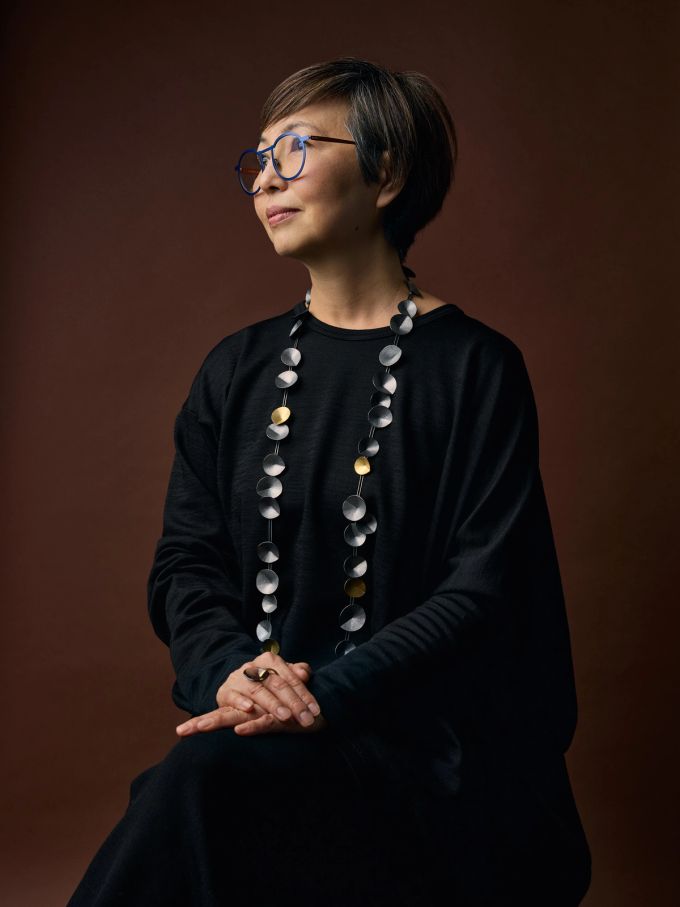
Kayo Saito: Bonds Between Makers And Wearers
The Kent-based jeweller speaks to Carpenters Workshop Gallery’s Tamara Platisa about the creative possibilities that first drew her to jewellery design, the feelings evoked by the natural landscapes of her native Japan and how she negotiates the relationship between wearability and artistic concept.
March 2026
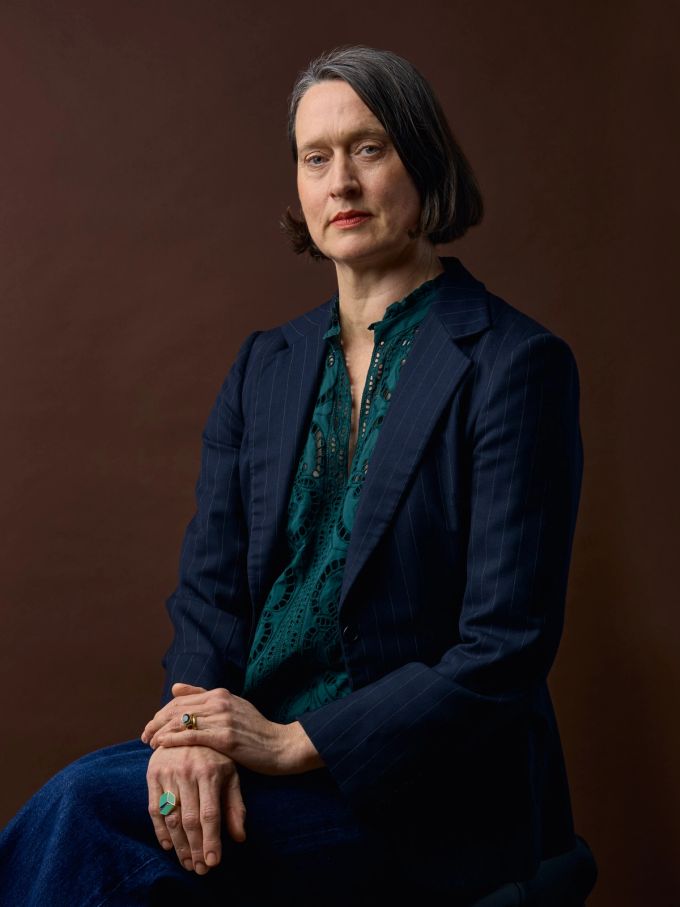
Ane Christensen: A Legacy Preserved Through Jewellery
As the Copenhagen-born artist’s works go on display at Carpenters Workshop Gallery London, she tells Head of Jewellery, Tamara Platisa, about the rings she's wearing, their role as vehicles for memory and how jewellery design has shaped her 25-year practice.